Loading stock data…
GRNT
$4.82-0.03 (-0.62%)
After Hours$4.91+0.09 (+1.87%)· Last close Jun 9
Granite Ridge Resources, Inc.
Historical Price
Price (Candle)
50-Day SMA
200-Day SMA
Whystock Brain
The Narrative
Granite Ridge Resources, Inc. in the Energy sector is trading at $4.80. Wall Street consensus targets $7.50 (4 analysts), implying a +56.1% move over the next 12 months. The stock is currently 28% below its 52-week high of $6.72, remaining 4.1% below its 200-day moving average. On fundamentals, Piotroski 6/9 shows mixed financial quality, Altman Z in the distress zone. Risk note: RSI 20 is oversold, raising the odds of a near-term bounce; MACD remains below its signal line. The Whystock Score of 50/100 suggests a balanced risk-reward profile.
Ecosystem Influences
Sell-side targets imply +56.1% upside over 12 months
Long-term trend bearish (price vs 200-day SMA)
Oversold momentum (RSI 20) — potential for technical mean-reversion
Loading Financials...
Peer Comparison
XOMCVXCOP
Whystock Valuation Model
Anchored to each ticker's own 5-year median trailing P/E, tilted by current ROE and growth. Fair P/E = own median P/E + (ROE × 10) + (max(revenue growth, earnings growth) × 15), capped at ±30% around the historical anchor. Fair Value = (Current Price ÷ Trailing P/E) × Fair P/E. Premium compounders like COST/MSFT are judged against their own multi-year norm rather than a sector median. Falls back to the sector-anchored formula (Tech ≈ 28, Comm Services ≈ 24, Utilities ≈ 18, Financials ≈ 14, etc.) for recent IPOs and tickers with insufficient history (< 24 monthly samples). Result is a normalised multiple gauge — not a price target.
Current Price$4.82
Potential Downside
0%
Whystock Fair Value$4.82
Price
UndervaluedFair ValueOvervalued
Simplified model based on P/E and ROE. Not a substitute for full valuation analysis. Data may be delayed. See our Terms.
Analyst Consensus4 analysts
Buy
Mean target$7.50+55.6%
Range$6.00 – $11.00
Fundamentals
Granite Ridge Resources, Inc. operates as a non-operated oil and natural gas exploration and production company. It owns a portfolio of wells and acreage across the Permian, Eagle Ford, Bakken, Haynesville, Denver-Julesburg (DJ), Appalachian basins, ...
Market Cap
Total dollar market value of a company's outstanding shares of stock (Price * Shares).
-
P/E Ratio
Priced for growth. Investors expect sustained double-digit expansion.
-
Beta
High-beta play. Expect amplified moves vs. the broad market.
-
Div Yield
Strong income play. Yield provides a meaningful total return floor.
6.85%
ROE
Average efficiency. Growth may require heavy reinvestment.
-5.95%
Volume
Today's trading volume
1.07M
Recent News

3 Cash-Burning Stocks We Think Twice About
Companies that burn cash at a rapid pace can run into serious trouble if they fail to secure funding. Without a clear path to profitability, these businesses risk dilution, mounting debt, or even bankruptcy.
Tidewater and Granite Ridge Resources Stocks Trade Down, What You Need To Know
A number of stocks fell in the afternoon session after crude oil edged lower on reports that the U.S. and Iran were nearing a draft peace resolution.
Granite Ridge Resources, Riley Exploration Permian, Chord Energy, Northern Oil and Gas, and Matador Resources Shares Are Falling, What You Need To Know
A number of stocks fell in the afternoon session after hopes of a diplomatic breakthrough between the U.S. and Iran sent crude oil prices tumbling.
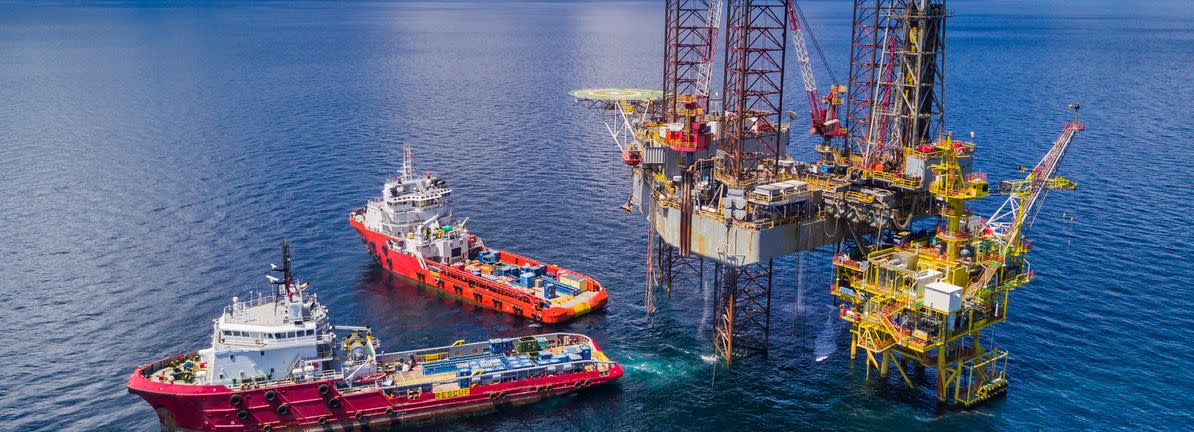
Undervalued Small Caps With Insider Buying To Enhance Your Portfolio
The United States market has experienced a slight dip of 1.0% over the past week, yet it remains robust with a 23% increase over the past year and earnings projected to grow by 17% annually. In this context, identifying small-cap stocks that are perceived as undervalued and have insider buying activity can be an intriguing strategy for investors seeking potential opportunities amidst fluctuating market conditions.
Granite Ridge Resources’s Q1 Earnings Call: Our Top 5 Analyst Questions
Granite Ridge Resources’ first quarter was met with a negative market reaction as both revenue and non-GAAP earnings per share missed Wall Street expectations. Management attributed the underperformance primarily to weak realized oil and natural gas prices in the Permian Basin, with CEO Tyler Parkinson stating that “service costs—primarily saltwater disposal—increased, a dynamic that is structural in the basin.” The company’s ongoing strategic shift toward operated partnerships helped drive doub